
Tech turnaround series, part 1: the imperative for turnaround in the modern tech landscape
Recent data from S&P Global Market Intelligence reveals a stark reality: U.S. corporate bankruptcies reached a 14-year high in 2024, with 694 filings—the most since 2010. Notably, over 60% of these companies sought to restructure and continue operations rather than liquidate.

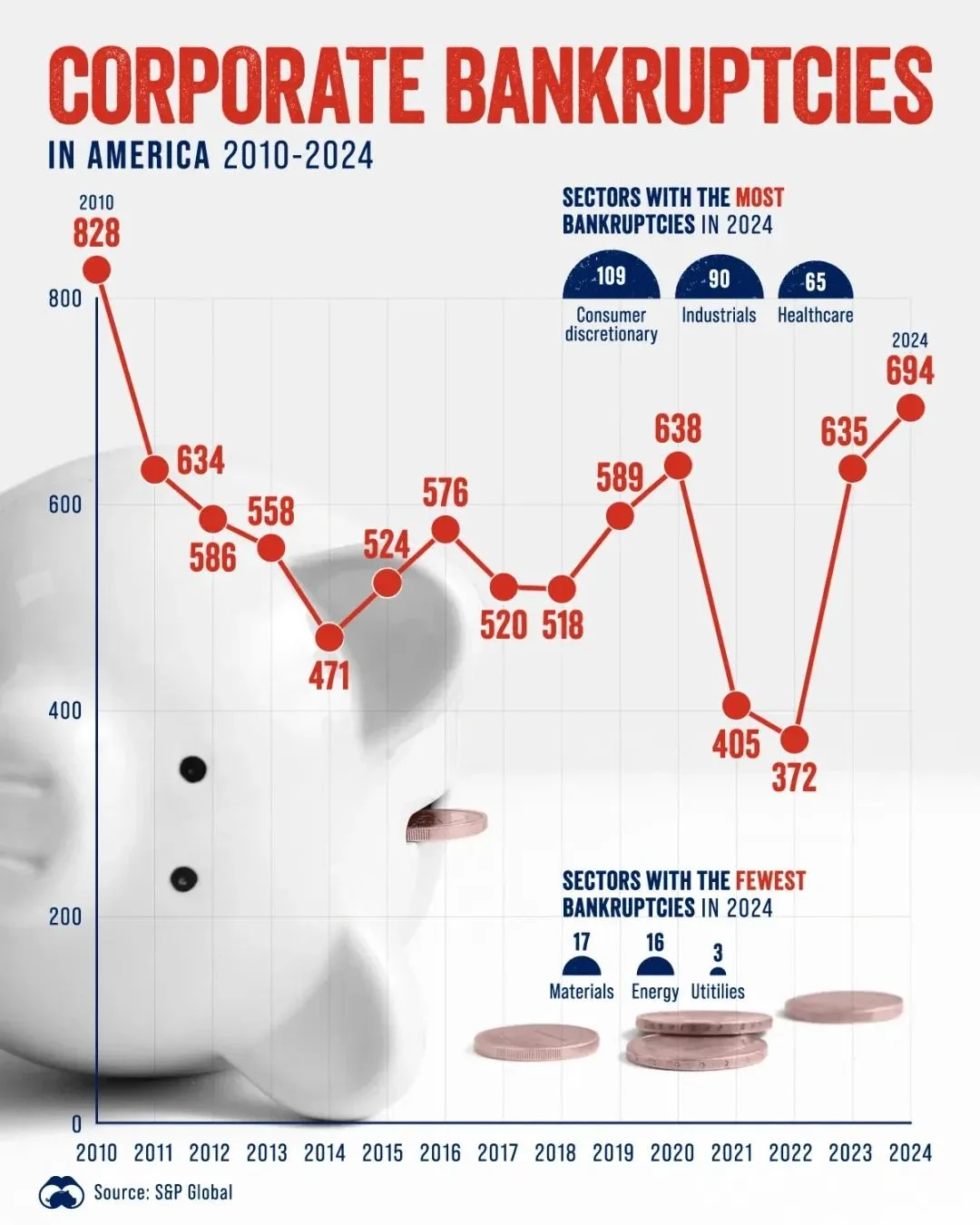
Recent data from S&P Global Market Intelligence reveals a stark reality: U.S. corporate bankruptcies reached a 14-year high in 2024, with 694 filings—the most since 2010. Notably, over 60% of these companies sought to restructure and continue operations rather than liquidate.
This surge underscores a critical shift in the business environment. The era of unchecked growth, fueled by cheap capital, has given way to a landscape where operational efficiency and sustainable profitability are paramount.
The technology sector is undergoing a structural correction. What was once a market defined by unchecked expansion and investor tolerance for negative cash flows has pivoted sharply. Macroeconomic headwinds—ranging from elevated inflation and rising rates to tighter liquidity and geopolitical dislocations—have catalyzed a re-rating of valuations and risk appetite.
Investor focus has shifted decisively from top-line hypergrowth to capital efficiency, profitability, and sustainable unit economics. In this environment, operational underperformance is no longer masked by easy capital or inflated multiples.
Technology firms—by virtue of their innovation cadence, high fixed costs, dependency on specialized human capital, and exposure to short product lifecycles—face amplified exposure in downturns. But with adversity comes the opportunity for recalibration.
A corporate turnaround in tech is not simply a financial engineering exercise. It is a fundamental re-architecture of the business. This involves rethinking go-to-market strategy, refining the product roadmap, overhauling org design, and embedding a culture of financial discipline. The objective isn’t just survival—it’s creating an investable business with scalable economics and institutional-grade governance.
Key to this transformation is a shift from GAAP-only reporting to metric-driven operational insight. Traditional financial statements often obscure the core levers of tech value creation. Instead, turnaround execution must be anchored in a set of tech-native KPIs:
- Annual Recurring Revenue (ARR)
- Net Revenue Retention (NRR)
- Customer Lifetime Value (LTV) vs. Customer Acquisition Cost (CAC)
- The Rule of 40
These metrics form the operational core of any turnaround thesis. They drive capital allocation, sharpen pricing strategies, expose retention risks, and validate the underlying business model.
In this series, we’ll break down the anatomy of successful tech turnarounds—unpacking the frameworks, execution playbooks, and investment narratives that move the needle.
Published in
For institutional and professional investors. Not investment advice.
Eighteen years in investment management, M&A and financial technology. A CFA Charterholder, he leads investment analysis, valuation and fund structuring across Significa's advisory and investment practices, and teaches valuation and fund structures in the CVC Builder curriculum. Concurrently Chief M&A and Growth Officer at AlternativeSoft in London; co-founder of MarkeScope, which developed the first stock-screening solution to incorporate risk measures. Treasurer of CFA Society Egypt; BSc Electrical, Electronics and Communications Engineering, Cairo University.