What changes when a sovereign fund is on the other side of the table
Founders ask us how to raise from a sovereign fund. The more useful question is what changes when one is on the other side of the table.
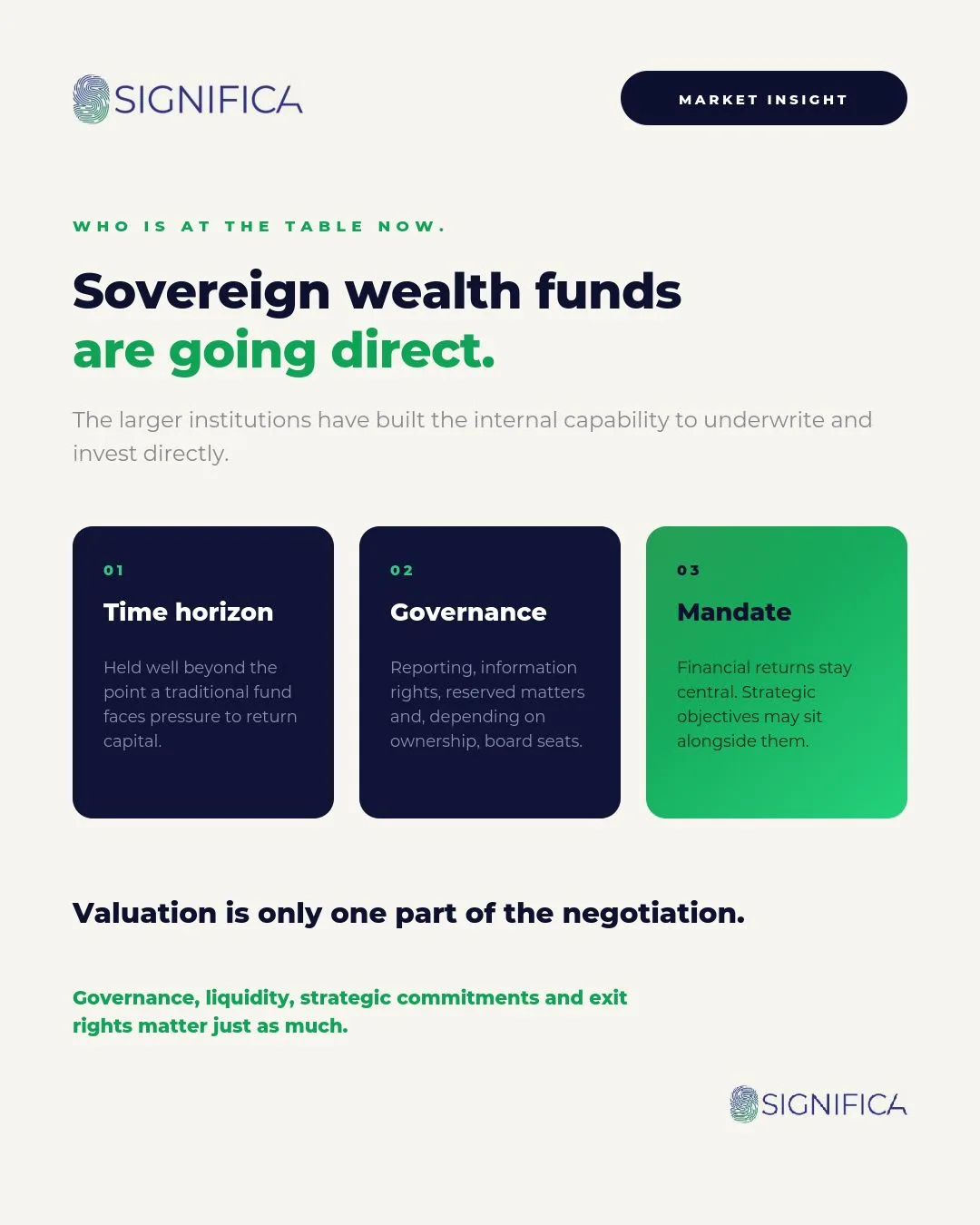
The question founders ask us is how to raise from a sovereign fund. The more useful question is what changes when one is on the other side of the table.
Gulf sovereign funds have historically accessed private growth through a mix of external managers, co-investments and direct positions. Increasingly, the larger institutions have built the internal capabilities to underwrite and invest directly.
For a founder, that changes a few things:
- Time horizon. Sovereign capital can hold a position well beyond the point at which a traditional fund may face pressure to return capital.
- Governance. A direct stake can bring greater expectations around reporting, information rights, reserved matters and, depending on ownership, board representation.
- Mandate. Financial returns remain central. But depending on the sovereign investor, strategic objectives such as sector development, localization or national priorities may sit alongside them.
None of this is a warning. It is simply a different counterparty with a different mandate.
And that means valuation is only one part of the negotiation. Governance, liquidity, strategic commitments and exit rights matter just as much.
We are seeing this shift show up directly in our live mandates.